Don’t outsource your spinal column
Zach Daniel on owning your AI stack — and why your context layer is the one thing you should never buy off the shelf.

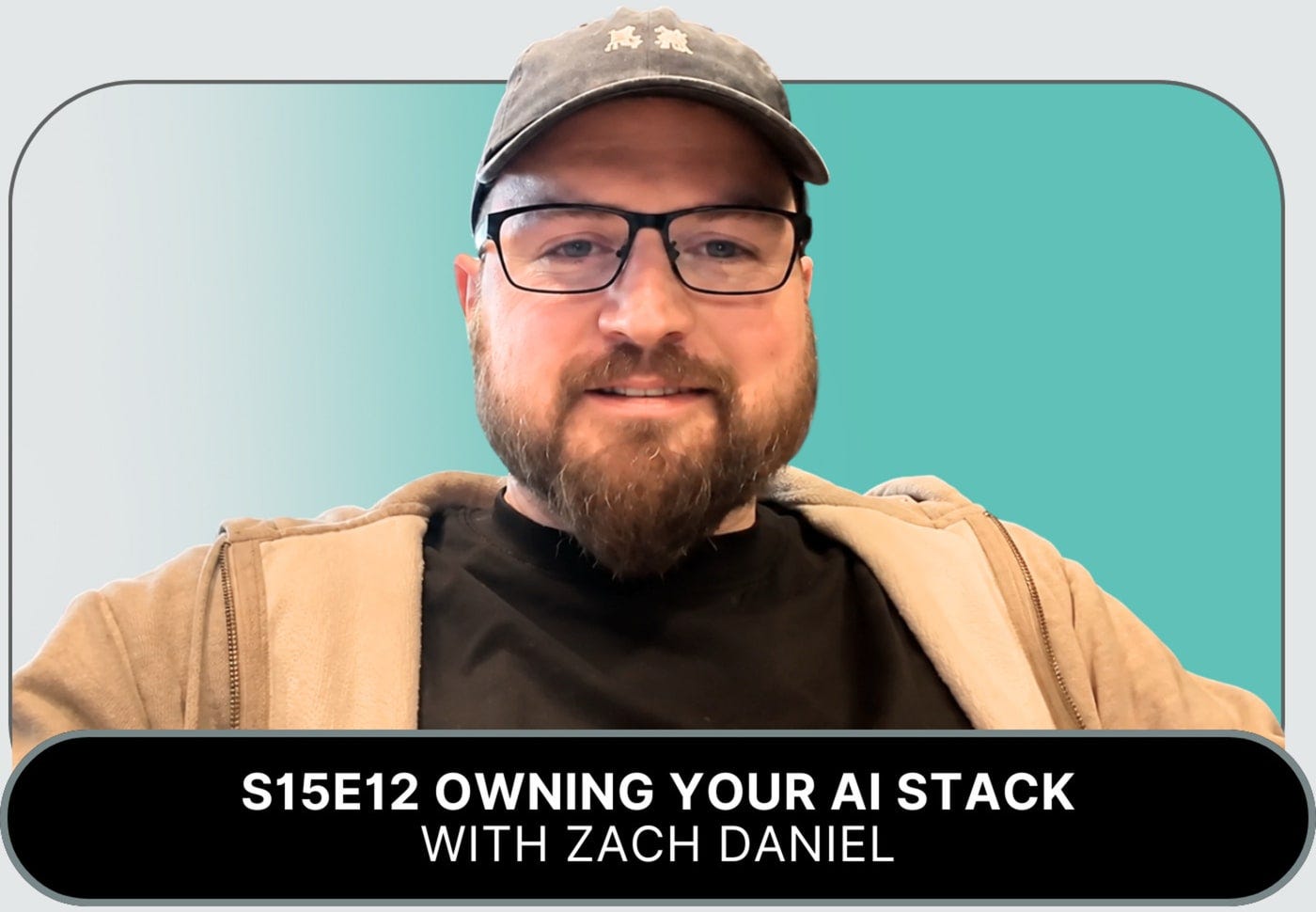
Every so often a podcast episode earns a permanent spot in my “make the team listen to this” list. This is one of them. The Elixir Wizards crew at SmartLogic sat down with Zach Daniel — creator of the Ash Framework and VP of Engineering at Remedy Meds — for an hour on AI agents, context layers and harness engineering. And no, you don’t need to write Elixir for this to matter. Swap in your stack of choice; the argument holds.
The line that stuck with me: don’t outsource your spinal column.
Here’s what Zach means: your organization’s knowledge — how your business actually works, what your protocols are, why decisions got made — now feeds everything. It feeds the humans, and increasingly it feeds every agent and LLM workflow you run. That makes your context layer the central nervous system of the company. Hand it to a vendor’s “knowledge graph” or some enterprise context lake, and you’ve sold the one thing you can never buy back.
His alternative is almost embarrassingly simple. The knowledge base lives in Git, right next to the code. The features enterprise knowledge-management vendors charge a fortune for — come free. You own what’s canon. It becomes the fuel that drives your AI adoption.
There’s a lot more in this podcast, and Zach is one of the smartest engineers I know. It’s worth the listen. Here are a few more tidbits, if you need convincing:
LLMs multiply what you already have. The quality of your codebase is the coefficient in every AI equation — good code in, good code out, and the reverse is brutal. Getting on top of that curve is crucial, and Zach’s team runs a job called Project Dripfeed: his secret sauce for automating incremental code improvement. Architecture by drip feed, not by big-bang rewrite.
Security flows to the lowest level. Any agent must conform to the lowest security level of any interface it touches. If your bot can post in the general Slack channel, it can never be trusted with anything the general channel can’t see — because nothing stops it from daisy-chaining information to places you never intended. Before you wire an AI mesh across every SaaS tool your company subscribes to, sit with those security implications for a moment.
There’s more — why junior engineers were never just cheap seniors, and a fast-track code review system that scores every PR on complexity, risk and alignment. But the spine of it (sorry) is this: owning your AI stack isn’t about cost. It’s about control and security, and about refusing to let the most important layer of your company live in someone else’s product.
Listen to the episode here. It’s the rare AI conversation that’s all practice, no hype.
And yes — his name is Zach, mine is Zac. No relation, but clearly good taste in names correlates with good taste in engineering.
Found this interesting? Word-of-mouth is how this newsletter grows, and you’re the only way it happens.
